

MORE THAN A CENTURY OF SISTERHOOD, HERITAGE, AND SERVICE

For more than a century, Daughters of the British Empire has brought women together through friendship, shared heritage, and a commitment to helping others. From its early beginnings in New York to the many chapters established throughout the United States, the organization has grown and evolved while remaining true to its founding principles of Friendship and Philanthropy.
The history of DBE is a story of women who organized, raised funds, supported their communities, and created lasting institutions. In Illinois, that legacy began in 1913 with the formation of the Prince of Wales Chapter. More than a hundred years later, members continue the work begun by those early pioneers, carrying their traditions and commitment to service into a new generation.

The Origins of DBE: A Shared Vision
Our story began with a visit to Canada by Mrs. J Elliot Langstaff of Brooklyn, New York. She attended a meeting of the Imperial Order Daughters of the Empire (IODE) while visiting Montreal. Inspired by the organization's work and its commitment to friendship and philanthropy, she returned to New York determined to establish a similar society.
That year, she organized the King Edward VII Chapter of the IODE in New York, but because the IODE was a Canadian organization, her society eventually adopted the name Imperial Order, Daughters of the British Empire in America (IODBE) in 1915.
The organization grew rapidly. Within its first several years, it had expanded to 76 chapters across the United States, bringing women together in fellowship and providing an organized network through which they could support charitable causes, particularly the care of elderly expats. .
DBE Illinois: Beginning 1913
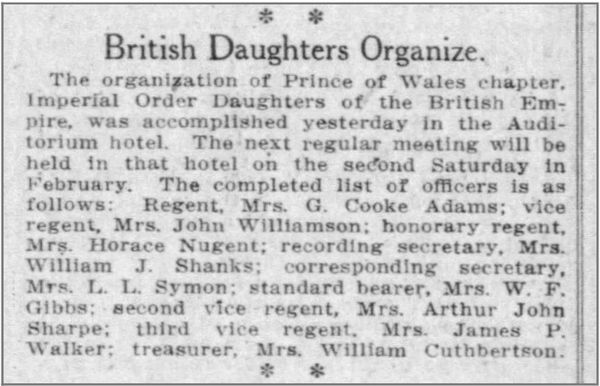
Illinois became a part of the story on January 11, 1913, when the first Illinois chapter, Prince of Wales was organized under the leadership of Julie Cooke Adams.
Prince of Wales because the 24th chapter established in the United States. Its membership grew quickly, reaching 200 women by the end of its first year. By the time its membership reach 382, the chapter had become a remarkable example of the enthusiasm and commitment of DBE's early members. Illinois was the fifth state to organize under the IODBE name and would go on to play a significant role in the development of the national society.
The early members were more than a social organization. They were organizers, fundraisers, and community leaders who transformed their shared heritage and fellowship into meaningful philanthropic work. As additional chapters formed, this network of women extended throughout the state, creating a legacy that would continue across generations.
Service During the First World War: 1914-1918
Despite original efforts to establish Illinois' British Home, when the First World War broke out in 1914, DBE directed much of its philanthropic work toward supporting the British war effort. Chapters across the United States mobilized to raise funds, gather supplies, and provide assistance to those serving overseas and those affect by conflict. Illinois members played an extraordinary role in this work.
Between 1914 and 1917, DBE contributed $139,510 to the DBE War Relief Fund, making is the largest state contribution, and helping DBE to raise the largest war relief fund of any British organization in the United States. The funds and supplies raised by DBE members supported an extensive range of wartime needs. Contributions included hundreds of tons of supplies for the comfort of those serving at sea and in hospitals, as well as motor cars, ambulances, and planes. Members also supported Red Cross work in Europe and organized clothing drives for the widows and children of British soldiers.
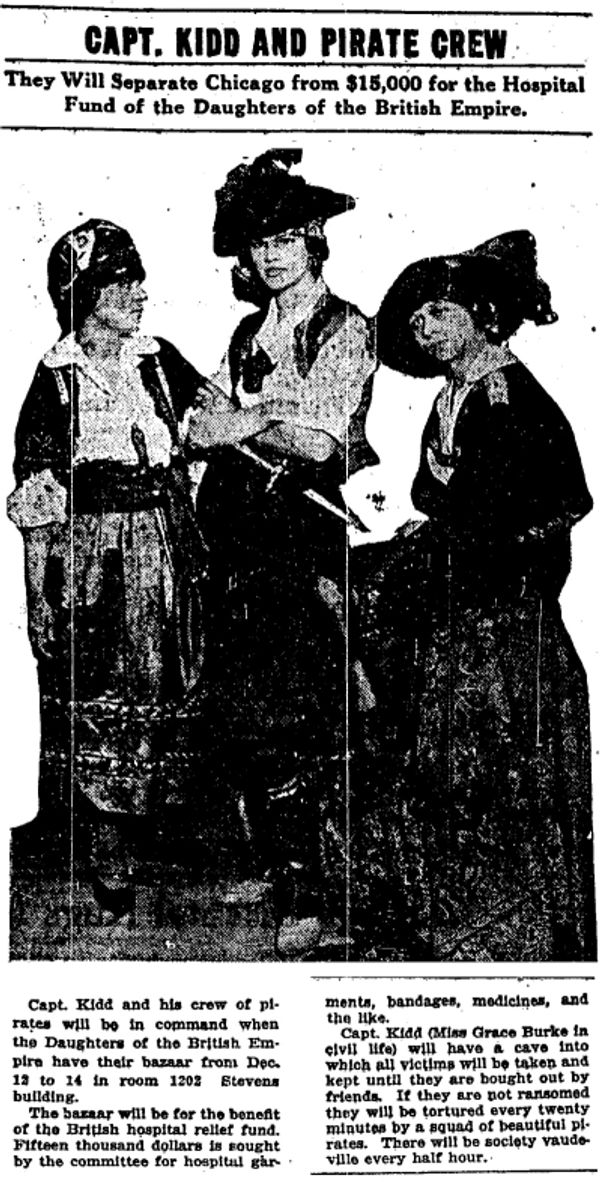
The work was not limited to traditional fundraising events. DBE members found imaginative ways to engage their communities and encourage generosity. One particularly memorable example appeared in a 1918 newspaper report describing members dressed as pirates, taking unsuspecting visitors into a cave where they were held for ransom in exchange for donations to the British hospital relief fund. It was an inventive fundraising spectacle combing entertainment and community participation with a serious humanitarian purpose.
The women of DBE Illinois were also outspoken in their concern for civilian lives during the war. Following the sinking of the RMS Lusitania in 1915, Julie Cooke Adams addressed fellow members with a condemnation of the event:
"The killing of those noncombatants was murder, not war."
Her words reflected the humanitarian concerns that accompanied the organization's charitable work throughout the conflict.
The First World War demonstrated what DBE's founding principles of friendship and philanthropy could accomplish when put into action. Through fundraising, material assistance, and support for those affected by war, members across Illinois and the wider national organization made a substantial contribution to the relief effort.
Their service during these years would become an important part of the legacy carried forward by generations of DBE members.

A National Society and a Home for Those in Need: 1920-1928
The year 1920 marked an important turning point for DBE. At the organization's first National Convention held in Detroit, Michigan, members voted on several significant changes, including the adoption of the official name National Society Daughters of the British Empire in the USA. Illinois' own Julie Cooke Adams was elected the society's first National President, reflecting the important role Illinois members had come to play in the organization's development.
Alongside its growing national structure, DBE continued to pursue its founding commitment to friendship and philanthropy. Members recognized that helping those in need could extend beyond individual acts of charity. The idea of bringing care and support together under one roof inspired the establishment of British Homes within the society's geographical districts.
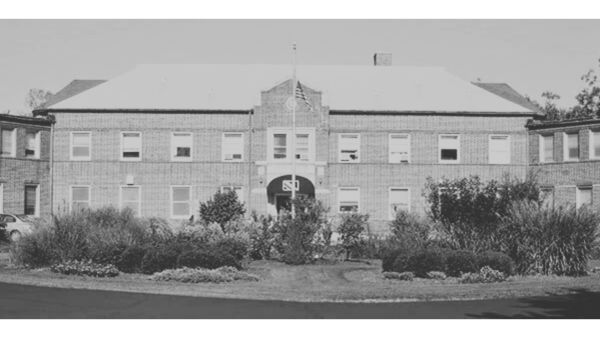
In the Midwest, the British Home in Brookfield, Illinois, was incorporated in 1920 and dedicated in 1925. Julie Cooke Adams played a central role in establishing the Home, working tirelessly to raise funds and support its development. She would serve as its President until her retirement in 1955.
The British Homes were incorporated as individual establishments, inaugurated under the auspices of DBE with assistance from other philanthropic societies and support from chapters within their respective districts. They represented a lasting expression of the organization's commitment to caring for those in need.
DBE continued to expand during these years. By 1928, the society had organized 15 states, encompassing a total of 119 chapters. What had begun with a small number of women united by a shared purpose had grown into a substantial national organization.
For Illinois, the establishment of the British Home was among the most significant achievements of its early members. Its history remains closely connected to the story of DBE in the Midwest and to the philanthropic work that continues to shape the organization today.
Carrying the Legacy Forward
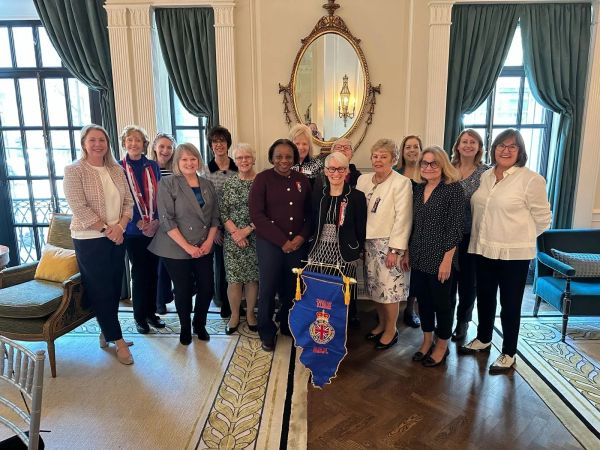
The surviving records tell only part of the story of Daughters of the British Empire in Illinois. Across the decades, generations of members have continued to build friendships, celebrate their shared heritage, and support charitable causes in their communities. From the early members of Prince of Wales Chapter to the chapters active throughout Illinois today, the spirit that brought DBE together in 1913 remains at the heart of the organization.
Our history is still being rediscovered through yearbooks, meeting minutes, photographs, and the memories of members. As we preserve these records and uncover more of the stories behind them, we celebrate not only the women who came before us, but also the responsibility of carrying their legacy forward.
Sisterhood. Heritage. Service.
Not Ourselves but the Cause.